
Mobile reception in the mountains: Why dead zones persist
How good is mobile reception in the mountains? This article explains why coverage gaps still exist despite better networks, and what really helps when you are on the move.
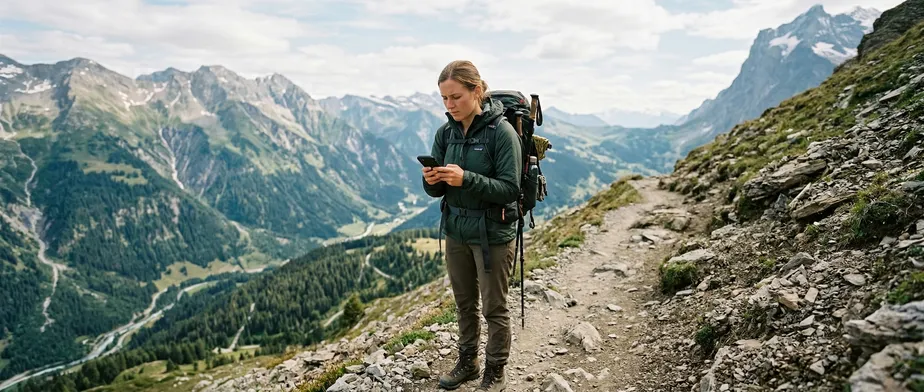
If you spend time in the mountains, you know the situation: navigation works smoothly one moment, then the connection is gone. In areas with big changes in elevation, remote paths and few residents, dead zones are still common. At the same time, mobile networks in Germany have clearly improved. Especially in populated areas, calls and mobile data are often much more stable than a few years ago.
This is where everyday life and trips to the mountains differ. In cities and towns, good reception is usually a given. In mountainous regions, however, that can change quickly. Sometimes a single slope, a valley cut or dense forest is enough to weaken the signal.
Why reception in the mountains is so variable
Mobile networks work best when signals can spread with as few obstacles as possible. In the mountains, that is often difficult. Rock faces, major altitude differences and remote locations all make uniform coverage harder. There is also a practical factor: network operators focus their expansion where many people live. That makes economic sense, but it also means that sparsely populated areas get less dense coverage.
That does not mean that nothing works in the mountains. In many places there is reception, it just is not equally strong everywhere. A small change of location can make a difference. If the signal is weak, going outside or walking a few metres further often restores a more stable connection.
What really helps when you are on the move
When reception is unstable, preparation helps most. These simple steps are often useful when you are out and about:
- Choose a spot with an open view for calls whenever possible.
- Go outside if reception is weak.
- Save important information in advance, such as maps or meeting points.
- Check mobile data before you run into a dead zone.
On trips or longer journeys, it is wise not to rely on a constant connection. If you have navigation, contacts or booking details ready beforehand, you stay flexible and often save time.
How good is network coverage in Germany really?
Overall, mobile standards today are clearly better than a few years ago. Providers have invested a lot to achieve the widest possible 4G coverage. This is very noticeable in populated areas. If you make calls, send messages or browse the web there, you can usually rely on the network.
Things are more difficult in regions where nature and terrain slow coverage down. This is not just a Bavarian issue, but it is especially visible in mountainous landscapes. Dead zones have not disappeared, but they are no longer the norm.
Who benefits from the right mobile plan
If you travel a lot and often make calls or use mobile data, a mobile contract is usually a good idea. Flat rates make monthly costs more predictable and add convenience in everyday life. Plans without a new smartphone can be particularly attractive. A mobile plan without a phone avoids extra financing costs for a device and often comes with appealing data allowances.
This suits users who do not need a new model every two years. If you are happy with your smartphone, you can choose a plan based more precisely on network, data needs and price.
Conclusion
Mobile reception in the mountains remains a challenge, but it does not have to be a constant annoyance. Network coverage in Germany is generally good, especially where many people live. In alpine or remote regions, gaps can still occur. With some preparation, a conscious approach on the move and a suitable plan, you can offset many of these issues.
More articles
Winter Magic in Bavaria: Experience Skiing and Snowshoeing
Bavaria delights with skiing, snowboarding, snowshoe hikes and unforgettable winter experiences in the Bavarian Alps.
Wine Regions and Cuisine in Bavaria’s Mountain Landscapes
Bavaria captivates with mountain scenery, wine regions, regional cuisine and traditional hospitality full of memorable moments of indulgence.
Experience Hiking and Via Ferrata Routes in Bavaria
Bavaria captivates with mountain hikes, via ferrata routes and alpine outdoor adventures in the impressive Bavarian Alps.

Munich for Visitors: Sights and Practical Tips
Munich combines history, culture, green spaces and Bavarian hospitality. Discover key sights and practical tips for a relaxed and rewarding stay.
Romantic Villages in Bavaria for a Relaxing Holiday
Romantic villages in Bavaria stand for peace, nature and authentic charm. Discover quiet holiday spots for relaxed days far from the crowds.
Enjoy relaxed hiking with children in Bavaria
Family-friendly hiking trails in Bavaria: tips for relaxed walks with children, suitable trail features and nature experiences between forests, meadows and lakes.
